Construction Sites Security: How to Prevent Theft, Trespassing and Vandalism
Construction sites are often exposed to security risks because they contain valuable equipment, building materials, power tools, vehicles and machinery. Unauthorised access, theft and vandalism can cause significant financial losses, delay project timelines and create safety hazards for workers and contractors.
Effective construction sites security helps builders, developers and project managers protect their assets, control site access and maintain a safer working environment throughout the construction process.
From residential developments and commercial building projects to large construction sites, having the right security measures in place can make a significant difference.
Baaz Security Services understands the importance of protecting business premises and valuable assets. By assessing site-specific risks and considering appropriate security solutions, construction businesses can take proactive steps towards reducing security vulnerabilities.
In this guide, we explain how construction site security works, the common risks builders face and the practical measures that can help prevent theft, trespassing and vandalism.
1. Understanding Common Construction Site Security Risks
Before developing a security plan, it is important to understand the threats that may affect a construction project.
Theft of Tools, Equipment and Building Materials
Construction sites often contain expensive tools, copper wiring, electrical equipment, fuel, timber and other materials that may be attractive to thieves.
Missing equipment can interrupt work, increase replacement costs and affect project deadlines. Some items may also be difficult to replace quickly, creating additional pressure on contractors.
How to reduce the risk:
- Store tools and smaller equipment in locked containers.
- Secure valuable machinery when it is not in use.
- Maintain an inventory of equipment and materials.
- Restrict access to storage areas.
- Arrange suitable security patrols or on-site security where required.
Trespassing and Unauthorised Access
Construction sites can attract trespassers, curious visitors and people attempting to access restricted areas. Unauthorised entry is particularly concerning when a site contains excavations, scaffolding, heavy machinery or unfinished structures.
Trespassing can expose site owners to safety risks, property damage and operational disruption.
How to reduce the risk:
- Install clear warning and restricted-access signage.
- Secure gates, doors and perimeter fencing.
- Establish designated entry and exit points.
- Verify the identity and authorisation of visitors.
- Consider security guards and access monitoring based on the site’s risk level.
Vandalism and Property Damage
Vandalism can include graffiti, damaged fencing, broken windows, tampering with equipment and deliberate damage to unfinished structures.
Such incidents can result in repair expenses, insurance claims and construction delays. Damage to temporary electrical systems, safety barriers or machinery may also create additional hazards.
How to reduce the risk:
- Maintain secure perimeter barriers.
- Improve lighting in vulnerable areas.
- Monitor high-risk sections of the site.
- Inspect the premises regularly.
- Report suspicious activity and document incidents promptly.
Understanding these risks is the first step towards creating an effective construction site security plan.
2. Install Strong Perimeter Fencing and Access Controls
A secure perimeter is one of the foundations of effective construction sites security.
Without appropriate barriers, it may be easier for unauthorised individuals to enter the site, access equipment or damage property.
Construction businesses should assess whether their fencing, gates and entry points provide suitable protection for the project’s location and stage of development.
Best Practices for Construction Site Perimeter Security
Secure fencing: Use suitable temporary or permanent fencing to define site boundaries and restrict access.
Lockable gates: Keep access gates secured outside authorised entry periods, where operationally appropriate.
Restricted entry points: Limit access to designated locations rather than allowing unrestricted movement around the site.
Warning signage: Display clear notices identifying restricted areas and relevant site safety requirements.
Regular inspections: Check fencing, locks and gates for damage, tampering or weaknesses.
For larger or higher-risk projects, a security assessment can help identify vulnerable access points and determine whether additional measures are required.
3. Hire Professional Construction Site Security Guards
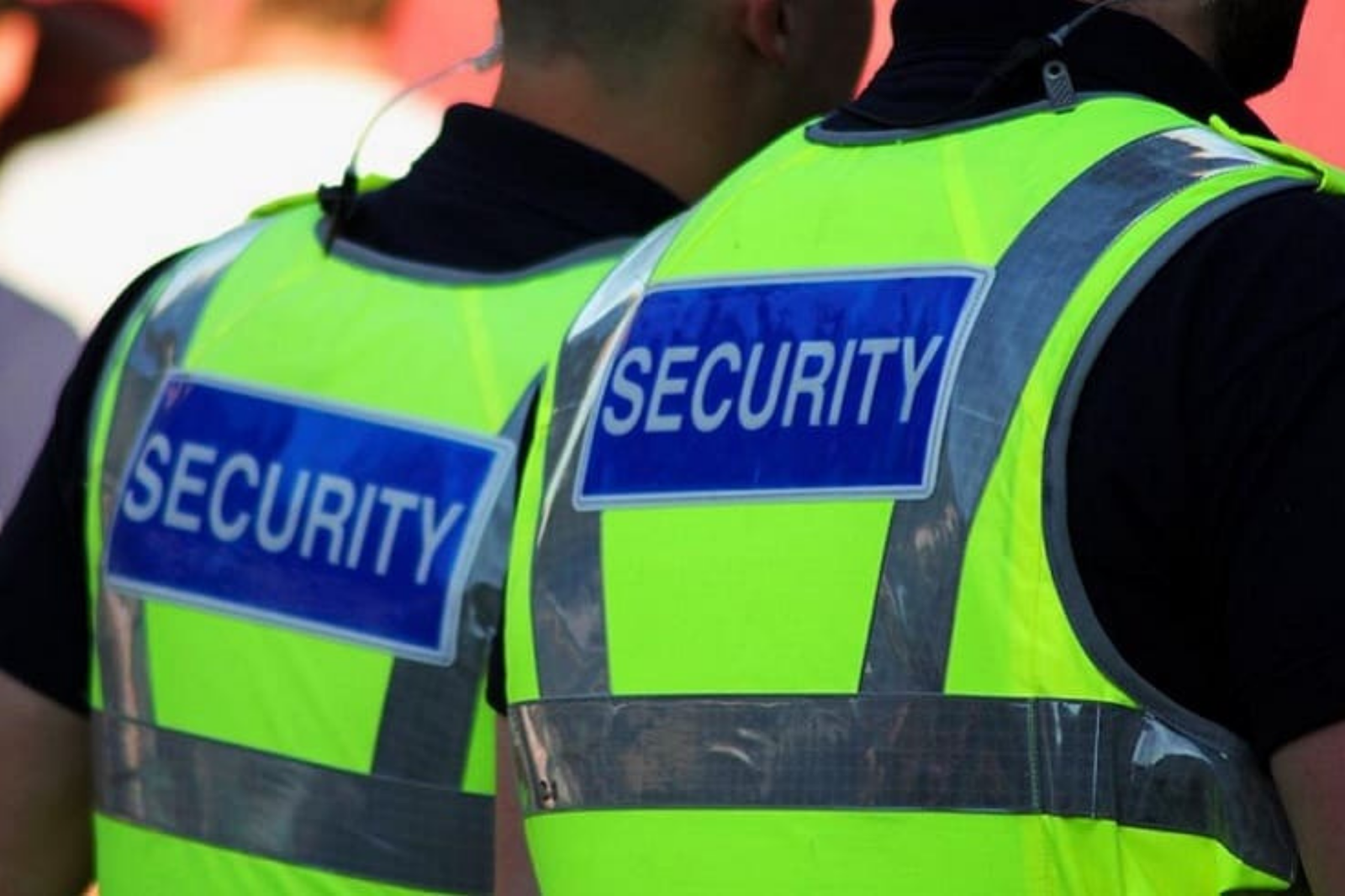
Professional security guards can provide a visible security presence and help monitor activity around a construction site.
Depending on the agreed scope of work, security personnel may help control access, conduct patrols, observe suspicious behaviour and report incidents to site management or emergency services when appropriate.
Construction site security guards may be particularly useful for projects that contain expensive machinery, valuable materials or multiple access points.
What Can Construction Security Guards Do?
- Monitor designated entry and exit points.
- Check visitor authorisation according to site procedures.
- Conduct scheduled patrols of approved areas.
- Observe and report suspicious activity.
- Help enforce site access rules.
- Record security incidents and communicate with site management.
- Escalate emergencies through established procedures.
Security personnel should work within their authorised duties and coordinate with construction managers to avoid interfering with building operations.
When selecting a security provider, confirm the relevant business and individual licences, staff suitability, insurance arrangements and experience with the type of site being protected.
For construction businesses in Perth and surrounding areas, Baaz Security Services can be contacted to discuss security requirements and suitable service options.
4. Use Security Patrols to Monitor Vulnerable Areas
Construction sites can remain vulnerable after workers leave for the day. Overnight periods, weekends and public holidays may require particular attention depending on the site’s location and risk profile.
Construction site security patrols can help provide additional oversight when a permanent on-site security presence is not necessary or practical.
How Security Patrols Help
Perimeter inspections: Patrols can check fences, gates and other potential access points.
Equipment monitoring: Guards can observe designated areas where machinery, tools or building materials are stored.
Suspicious activity reporting: Security personnel can document unusual activity and follow agreed escalation procedures.
Visible deterrence: A security presence may discourage opportunistic theft, trespassing and vandalism.
Incident documentation: Patrol reports can help site managers understand recurring problems and improve future security arrangements.
Patrol frequency should be based on the site’s layout, the value of its assets, previous incidents and the level of risk identified during assessment.
5. Improve Lighting Across the Construction Site
Poor lighting can make it harder to identify activity around a construction site, particularly after dark.
Dark entrances, storage areas, temporary access roads and perimeter boundaries may create security blind spots.
Appropriate lighting can improve visibility and support the effectiveness of patrols and surveillance systems.
Areas to Consider for Security Lighting
- Main entrances and vehicle gates
- Equipment and material storage areas
- Site offices and temporary buildings
- Parking and loading zones
- Perimeter boundaries
- Areas containing valuable machinery
Lighting should be positioned to improve visibility without creating unnecessary glare or hazards for workers and nearby road users.
For sites with changing layouts, lighting requirements should be reviewed as construction progresses.
6. Install CCTV and Remote Monitoring Systems
CCTV can play an important role in construction site security by providing visibility over selected areas and helping document incidents.
When appropriately positioned and maintained, cameras can support the monitoring of entrances, storage locations and other vulnerable sections of a project.
Benefits of Construction Site CCTV
Visual monitoring: Cameras can help security teams observe activity in designated areas.
Incident evidence: Recorded footage may assist with investigating theft, vandalism or unauthorised access, subject to applicable laws and access controls.
Remote visibility: Suitable systems may allow authorised personnel to view footage remotely.
Security coordination: CCTV can complement on-site guards, mobile patrols, lighting and access controls.
However, cameras should not be treated as a complete security solution. A camera cannot physically prevent someone from entering a site, and footage may not be reviewed in real time unless appropriate monitoring arrangements are in place.
Businesses should also consider privacy obligations, camera placement, recording retention and secure access to footage.
For higher-risk projects, combining CCTV with physical security measures may provide more comprehensive protection than relying on cameras alone.
7. Secure Valuable Construction Equipment and Materials
Tools, machinery and building materials can represent a substantial investment for builders and contractors.
Leaving valuable items unsecured can increase the risk of theft, especially when equipment is stored in accessible areas.
An organised asset protection process helps businesses track their equipment and identify potential security weaknesses.
Practical Equipment Security Measures
- Keep an up-to-date equipment register.
- Record serial numbers and retain purchase documentation.
- Mark tools and machinery with identifiable details where appropriate.
- Lock tools inside secure storage containers when not in use.
- Park machinery in designated secured areas.
- Restrict access to fuel, electrical supplies and high-value materials.
- Record equipment movements between locations.
- Conduct regular stock checks.
Site managers should also establish clear procedures for issuing tools, returning equipment and reporting missing items.
These measures can help identify discrepancies early and make it easier to investigate incidents.
8. Control Worker, Contractor and Visitor Access
Construction sites often involve multiple subcontractors, suppliers, delivery drivers and authorised visitors.
Without clear access procedures, site managers may struggle to determine who is on the premises and whether individuals have permission to enter restricted areas.
A structured access control system can improve both security and site management.
Recommended Access Control Practices
Maintain visitor records: Record relevant visitor details according to site procedures and applicable privacy requirements.
Verify authorisation: Confirm that contractors and visitors have a legitimate reason to enter the site.
Use identification systems: Where appropriate, provide visitor passes or worker identification.
Define restricted areas: Limit access to hazardous or sensitive sections of the project.
Manage deliveries: Establish designated delivery times and locations to reduce confusion around site entrances.
Review access permissions: Remove or update access privileges when workers or contractors no longer require them.
Security guards can support these processes by following the access rules established by site management.
9. Develop a Construction Site Security Plan
Every construction project has a different layout, budget, operating schedule and risk profile. A security plan should reflect these differences rather than relying on a one-size-fits-all approach.
A practical construction site security plan should identify potential threats, determine suitable protective measures and establish clear responsibilities.
What Should a Security Plan Include?
- Risk assessment: Identify vulnerable areas, valuable assets and previous security incidents.
- Site boundaries: Document entrances, gates, fencing and restricted areas.
- Access procedures: Define who can enter the site and how authorisation is checked.
- Security staffing: Determine whether on-site guards, mobile patrols or a combination is appropriate.
- Equipment protection: Establish procedures for storing and tracking tools and machinery.
- Lighting and CCTV: Identify locations where additional visibility or monitoring may be beneficial.
- Incident response: Set out reporting and escalation procedures.
- Regular reviews: Reassess security as site conditions, equipment locations and project stages change.
For example, a project with expensive machinery and limited perimeter fencing may need different measures from a smaller residential construction site in a well-monitored location.
A tailored plan helps construction businesses allocate security resources where they are most useful.
10. Why Construction Sites Security Is Important in Perth, WA
Construction projects across Perth and Western Australia can involve residential developments, commercial buildings, industrial facilities and infrastructure works.
Each project may face different security challenges depending on its location, access arrangements, surrounding environment and operating hours.
Construction sites security in Perth can help businesses address concerns such as after-hours access, equipment protection, trespassing and property damage.
Builders and developers should consider the security requirements of their projects from the planning stage rather than waiting until an incident occurs.
Depending on the risk assessment, suitable measures may include:
- On-site security guards
- Mobile security patrols
- Perimeter monitoring
- CCTV and appropriate lighting
- Access control procedures
- Equipment and material protection
- Documented incident reporting
Baaz Security Services can be approached to discuss your construction site’s requirements and determine whether its available services are suitable for your project.
Before engaging any security provider, verify the relevant licences and confirm the precise services, operating hours and responsibilities included in the agreement.
11. How to Choose the Right Construction Site Security Company
Choosing a suitable security company is an important part of protecting a construction project.
The lowest-priced service may not necessarily provide the level of protection or operational support your site requires.
When comparing construction site security companies, consider the following factors.
Verify Licensing and Compliance
Confirm that the company and its personnel hold the licences required for their activities in the relevant state or territory.
In Western Australia, security licensing is regulated under applicable state legislation. Check current requirements through the WA Police Force and other relevant official resources.
Assess Relevant Experience
Ask whether the provider has experience with similar construction environments, site layouts and security requirements.
Understand the Proposed Services
Clarify whether the proposal includes static guards, patrols, access control, incident reporting or other services you require.
Review Communication Procedures
Find out how guards communicate with site managers and how incidents, missed shifts or urgent concerns are escalated.
Confirm Insurance and Contract Details
Request relevant insurance information and review the service agreement, including staffing arrangements, fees, responsibilities and cancellation terms.
Request a Site-Specific Recommendation
A suitable provider should consider your project’s operating hours, assets, access points and risk profile before recommending a security arrangement.
For businesses exploring construction security in Perth, Baaz Security Services is one option to contact when comparing providers and evaluating available solutions.
Conclusion: Protect Your Construction Project With the Right Security Measures
Theft, trespassing and vandalism can create unnecessary expenses, operational disruption and safety concerns for construction businesses. Effective construction sites security helps address these risks through a combination of access control, equipment protection, suitable lighting, surveillance, patrols and professional security personnel.
The most effective approach is to identify your site’s vulnerabilities, implement appropriate protective measures and review the security plan as construction progresses.
For builders, developers and project managers in Perth, selecting a suitable security provider is an important step towards protecting valuable assets and supporting smoother project operations.
Contact Baaz Security Services to discuss your construction site security requirements and explore suitable security solutions for your project.