Security Monitoring: How 24/7 Control Rooms Protect Businesses
Security threats can occur at any time, whether a business is operating during the day or closed overnight. From unauthorised access and suspicious activities to theft, vandalism and emergency situations, businesses need reliable security measures that operate around the clock.
This is where 24/7 security monitoring becomes essential.
Modern security monitoring involves more than simply installing CCTV cameras. It combines surveillance technology, trained monitoring personnel, alarm systems and coordinated response procedures to help businesses identify potential threats and respond to incidents promptly.
A professionally managed security control room acts as a central point for monitoring multiple locations, assessing potential risks and coordinating appropriate security responses.
For businesses operating across offices, warehouses, retail stores, construction sites and commercial facilities, continuous security monitoring provides an additional layer of protection.
At Baaz Security Services, we understand the importance of proactive security solutions that help businesses protect their people, property and valuable assets.
In this guide, we explain how security control room operations work, why 24/7 monitoring matters and how businesses can benefit from professional security monitoring services.
1. What Is 24/7 Security Monitoring?
24/7 security monitoring is the continuous observation of business premises, security systems and potential threats through dedicated monitoring operations.
It allows security personnel to monitor properties throughout the day and night, including weekends and public holidays.
Depending on the security arrangement, monitoring may involve:
CCTV camera surveillance.
Intrusion and alarm monitoring.
Monitoring access control systems.
Identifying suspicious activities.
Monitoring perimeter security.
Coordinating security patrols.
Reporting and escalating security incidents.
Supporting emergency response procedures.
Unlike security arrangements that rely entirely on physical inspections, remote monitoring allows authorised personnel to observe multiple areas and identify potential concerns without needing to be physically present at every location.
2. How Does a Security Control Room Operate?
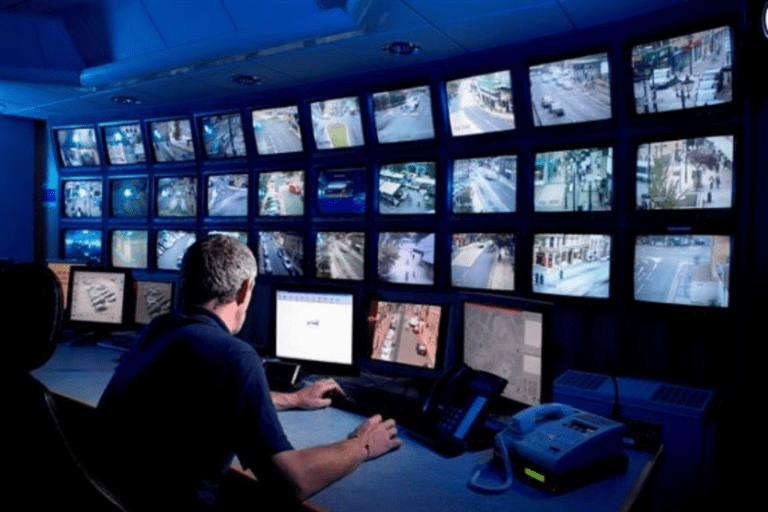
A security control room is a centralised facility where trained operators monitor security systems, assess alerts and coordinate responses to potential incidents.
It acts as the communication and monitoring centre for security operations.
Here is how a typical security control room operates:
Step 1: Continuous Surveillance
Security operators monitor live CCTV footage from cameras installed across different locations.
These cameras may cover entrances, reception areas, car parks, warehouses, loading zones, restricted areas and building perimeters.
Continuous surveillance helps operators identify unusual activities and potential security concerns.
Step 2: Alarm and Alert Monitoring
Modern security systems can generate alerts when unusual activity is detected.
Examples include:
Unauthorised access attempts.
Intrusion detection alerts.
Restricted-area access.
After-hours movement.
Security system malfunctions.
Perimeter breaches.
Operators assess these alerts to determine whether further investigation or action is required.
Step 3: Incident Verification
Not every security alert represents an actual threat.
For example, an alarm could be triggered by an authorised employee, environmental conditions or a technical issue.
Control room operators assess available CCTV footage, alarm information and other relevant details to help verify the situation.
This process helps reduce unnecessary responses and allows genuine incidents to receive appropriate attention.
Step 4: Coordinating Security Responses
When a potential security incident is identified, control room personnel follow established escalation procedures.
Depending on the situation, this may involve:
Contacting on-site security guards.
Dispatching mobile patrols.
Notifying authorised business representatives.
Contacting emergency services when necessary.
Following the property’s incident response plan.
Quick and organised communication is essential for managing security incidents effectively.
Step 5: Incident Reporting and Documentation
Security incidents should be recorded accurately to support future investigations and security improvements.
Reports may include:
Date and time of the incident.
Location of the activity.
Description of the situation.
Actions taken by security personnel.
Relevant CCTV footage or alarm records.
Outcome of the response.
Accurate reporting helps businesses understand security patterns and identify areas that may require additional protection.
3. Why Do Businesses Need 24/7 Security Monitoring?
Many businesses operate outside traditional working hours. Even when employees are not present, buildings, equipment, stock and confidential information may remain exposed to security risks.
Having continuous security monitoring helps businesses maintain visibility over their premises.
Here are some important benefits.
A. Protection Against Unauthorised Access
Unauthorised access can expose businesses to theft, property damage and other security incidents.
Security monitoring helps identify unusual access attempts and activity around restricted areas.
When integrated with access control systems, CCTV and alarm technology, monitoring can provide better visibility over who enters and exits a property.
B. Faster Identification of Suspicious Activities
Early identification of suspicious behaviour can help prevent a minor security concern from becoming a more serious incident.
For example, unusual movement around a warehouse after business hours may require further investigation.
Monitoring operators can assess the situation and coordinate an appropriate response.
C. Improved After-Hours Security
Businesses can face different security risks when premises are closed.
Warehouses, construction sites, retail outlets and commercial buildings may be particularly vulnerable when fewer people are present.
24/7 security monitoring helps maintain surveillance during these periods and supports the escalation of potential incidents.
D. Better Protection of Business Assets
Businesses invest significantly in equipment, machinery, stock, technology and infrastructure.
Security monitoring can help protect these valuable assets by identifying suspicious activities and supporting timely intervention.
E. Improved Emergency Coordination
Security incidents do not always involve theft or unauthorised entry.
Emergencies such as fire alarms, medical incidents, equipment failures and other unexpected events may also require immediate attention.
A well-organised control room can help communicate relevant information and coordinate responses according to established emergency procedures.
4. The Role of CCTV in Modern Security Monitoring
CCTV plays an important role in modern security monitoring operations.
However, the effectiveness of a CCTV system depends on camera placement, image quality, monitoring procedures and the ability to respond to identified incidents.
Businesses should consider installing cameras in important areas such as:
Main entrances and exits.
Reception and visitor areas.
Car parks and vehicle access points.
Warehouses and storage facilities.
Loading and unloading zones.
Restricted-access areas.
Building perimeters.
Modern CCTV systems may also include advanced features such as motion detection, remote viewing, video analytics and automated alerts.
When combined with trained security monitoring personnel, these technologies can improve visibility and help businesses manage security risks more effectively.
5. How Security Monitoring Supports Different Industries
Every industry has unique security requirements. A suitable security monitoring strategy should reflect the nature of the business and the risks associated with its operations.
Corporate Offices
Corporate offices may require monitoring of entrances, reception areas, employee access points, car parks and restricted departments.
Security monitoring helps maintain controlled access and supports employee and visitor safety.
Warehouses and Distribution Centres
Warehouses often contain valuable inventory, machinery and delivery equipment.
Monitoring can help identify suspicious movement, unauthorised access and unusual activities around storage and loading areas.
Retail Stores and Shopping Centres
Retail businesses may experience theft, vandalism and unauthorised access.
CCTV monitoring and alarm surveillance can help security personnel observe customer areas, entrances, stockrooms and other important locations.
Construction Sites
Construction sites frequently store expensive tools, machinery and building materials.
After-hours security monitoring can help identify suspicious activity around site boundaries, equipment storage areas and access points.
Industrial Facilities
Industrial facilities may require monitoring of restricted areas, machinery zones, storage facilities and perimeter access.
A structured monitoring strategy helps businesses maintain better visibility over their operations.
6. Combining Remote Security Monitoring with On-Site Security Guards
Remote monitoring and physical security personnel are most effective when they work together.
While CCTV and control room operators provide visibility across multiple locations, on-site security guards can physically inspect premises, manage access and respond to situations within their assigned responsibilities.
A combined approach may include:
Control room operators monitoring CCTV footage.
Security guards conducting regular patrols.
Operators communicating suspicious activity to on-site personnel.
Mobile patrols attending locations when required.
Coordinated incident reporting.
Emergency response escalation.
For larger commercial properties, this combination can provide a more comprehensive security arrangement.
Remote monitoring should complement physical security rather than automatically replace it.
7. Important Features to Look for in a Professional Security Monitoring Service
Choosing the right security monitoring provider is essential for maintaining reliable protection.
Before selecting a provider, businesses should consider the following factors.
1. Continuous monitoring capability
Check whether the provider can deliver the required monitoring coverage, including overnight periods, weekends and public holidays.
2. Trained monitoring personnel
Operators should understand surveillance procedures, alarm verification, incident escalation and emergency communication.
3. Reliable communication systems
Clear communication between control room operators, security guards, business representatives and emergency services is important.
4. Effective incident reporting
Businesses should receive accurate records of relevant incidents and actions taken.
5. Appropriate technology
The provider should understand CCTV systems, alarm monitoring, access control and other security technologies relevant to the site.
6. Clear escalation procedures
A professional monitoring arrangement should have documented procedures for identifying, verifying and escalating security incidents.
7. Privacy and compliance
Monitoring operations should follow applicable privacy, surveillance, data protection and security industry requirements.
8. How AI and Smart Technology Are Improving Security Monitoring
Technology is changing the way businesses approach security monitoring.
Artificial intelligence and smart surveillance systems can help operators identify unusual patterns and prioritise potential security alerts.
Some emerging capabilities include:
AI-powered video analytics.
Automated motion detection.
Intelligent intrusion alerts.
Facial recognition technology, where lawful and appropriately authorised.
Number plate recognition.
Remote CCTV access.
Smart alarm integration.
Automated incident notifications.
These technologies can improve monitoring efficiency by helping operators focus on events that may require attention.
However, technology should support trained human decision-making rather than replace it entirely.
Human verification remains important for assessing context, reducing false alarms and determining appropriate responses.
9. Common Security Monitoring Mistakes Businesses Should Avoid
Even businesses with modern surveillance systems can experience security weaknesses if their monitoring procedures are poorly managed.
Some common mistakes include:
Installing CCTV cameras without assessing coverage gaps.
Relying entirely on automated alerts.
Ignoring regular equipment maintenance.
Having unclear incident escalation procedures.
Failing to review security reports.
Not testing alarm systems regularly.
Using outdated surveillance technology.
Overlooking after-hours security requirements.
Regular system reviews and professional security assessments can help businesses identify these issues and improve their overall security arrangements.
How Baaz Security Services Can Help Protect Your Business
Effective security monitoring requires reliable systems, trained personnel and well-defined response procedures.
Baaz Security Services understands that businesses need dependable security solutions to protect their premises, employees and valuable assets.
Whether you manage a commercial building, retail property, warehouse, industrial facility or construction site, having an appropriate security strategy is essential.
By combining professional security services with suitable monitoring arrangements, businesses can improve their ability to identify potential risks and coordinate appropriate responses.
Baaz Security Services focuses on supporting businesses with security solutions that prioritise professionalism, vigilance and safety.
If you are looking to strengthen your business security arrangements, speak with Baaz Security Services about your monitoring and site protection requirements.
Final Thoughts
Security threats can occur at any time, making continuous protection an important consideration for modern businesses.
With 24/7 security monitoring, businesses can improve surveillance, identify suspicious activities, manage security alerts and coordinate responses more effectively.
From CCTV surveillance and alarm monitoring to professional control room operations, a well-planned security strategy helps create a safer and more secure business environment.
Baaz Security Services understands the importance of reliable security solutions and the role they play in protecting commercial properties, employees and valuable assets.
Looking to strengthen your business security? Contact Baaz Security Services to discuss professional security solutions for your premises.