How to Conduct a Security Risk Assessment for Your Business
A security risk assessment can help businesses identify vulnerabilities before they develop into serious security incidents. By reviewing your property, access controls, CCTV, lighting, employee procedures, valuable assets and after-hours security, you can identify areas that may require additional protection.
Every business has different security requirements. A retail store may be concerned about theft and aggressive behaviour, while a warehouse may face risks involving unauthorised access, vandalism or after-hours intrusion.
For some businesses, the findings of a security assessment may also indicate a need for professional security guard services, mobile patrols or other physical security measures.
What Is a Security Risk Assessment?
A security risk assessment is a structured review of your business, property, people, processes and existing security measures to identify potential vulnerabilities.
The purpose is not necessarily to eliminate every possible risk. Instead, a security risk assessment helps you understand where weaknesses may exist and determine appropriate measures to reduce exposure.
A business security assessment may review:
- Physical security
- Access control
- CCTV and surveillance
- Lighting
- Employee and visitor procedures
- Emergency response
- After-hours security
- Valuable assets
- Internal and external security risks
- The potential need for professional security guard services
Why Is a Security Risk Assessment Important?
Many businesses review their security only after an incident has occurred. A proactive security assessment allows businesses to identify weaknesses before they become larger problems.
A security risk assessment can help you:
- Identify vulnerable areas of your property
- Recognise potential security threats
- Review existing security procedures
- Improve access control
- Identify CCTV blind spots
- Reduce opportunities for theft and vandalism
- Improve employee and customer safety
- Strengthen emergency response procedures
- Determine whether additional security personnel are required
- Develop a more proactive business security strategy
The objective is to understand your business security risks and implement measures that are appropriate for your property and operations.
1. Start With a Physical Security Inspection
The first step is to examine the physical property.
Walk around your business and consider the building from the perspective of someone attempting to enter without permission.
Check:
- Main entrances
- Emergency exits
- Doors and locks
- Windows
- Fences and gates
- Loading areas
- Storage areas
- Car parks
- Rooftop or external access points
- Areas hidden from public view
- After-hours access points
Ask yourself:
Could someone enter this property without being noticed?
If the answer is yes, that area may require additional attention.
Professional security guard services can complement physical security by providing trained personnel to monitor vulnerable areas and respond to suspicious activity within the agreed scope of service.
2. Review Your Access Control
Access control is an important part of business security.
You should know who can enter your premises, which areas they can access and when they are authorised to be there.
Review:
- Employee access
- Visitor access
- Contractor access
- Delivery access
- Staff-only areas
- Restricted rooms
- Keys and access cards
- After-hours access
Businesses should also review what happens when an employee leaves the organisation.
Are access cards cancelled?
Are keys returned?
Are passwords and access credentials removed?
Small gaps in access control can create significant security vulnerabilities.
3. Check Your CCTV Coverage
Security cameras can form an important part of a wider security strategy. However, simply having CCTV installed does not necessarily mean your property is adequately monitored.
Review whether cameras cover important areas such as:
- Entrances and exits
- Cash-handling areas
- Car parks
- Loading zones
- Storage facilities
- Restricted areas
- High-value asset locations
- Blind spots around the building
Also consider whether cameras provide usable footage at night and whether recordings can be accessed when an incident occurs.
CCTV can work alongside trained security personnel who monitor activity and respond to security concerns according to the agreed procedures.
4. Identify Security Blind Spots
Security blind spots are areas that cannot be easily seen or monitored.
These may include:
- Dark sections of a car park
- Areas behind buildings
- Storage rooms
- Side entrances
- Delivery areas
- Unused sections of a property
- Areas outside CCTV visibility
Walk through your property at different times of the day.
A location that appears secure during business hours may become more vulnerable after dark.
Depending on the property’s requirements, businesses may consider mobile patrols or onsite security guard services outside normal operating hours.
5. Evaluate Security Lighting
Good lighting can improve visibility around a property and help security personnel identify activity more easily.
Check lighting around:
- Entrances
- Car parks
- Walkways
- Fences
- Loading areas
- Emergency exits
- Storage areas
- Building perimeters
Replace damaged or non-functioning lights promptly.
Motion-activated lighting may also be considered for areas that do not require continuous illumination.
6. Assess Employee and Visitor Security Procedures
Security does not depend only on locks, cameras and alarms.
Employees can also play an important role in protecting a business.
Ask:
- Do employees know how to report suspicious activity?
- Are visitors required to sign in?
- Do staff know who is authorised to access restricted areas?
- Are opening and closing procedures documented?
- Do employees know what to do during an emergency?
- Is there a clear incident reporting process?
Security procedures should be clear and practical enough for employees to follow consistently.
7. Identify Your Most Valuable Business Assets
Not every part of a business carries the same level of security risk.
Identify the assets that could have the greatest impact if they were stolen, damaged or compromised.
These may include:
- Cash
- Stock
- Equipment
- Vehicles
- Customer information
- Business records
- Technology
- Machinery
- Intellectual property
Once you identify your highest-value assets, review whether they have appropriate protection.
8. Examine After-Hours Business Security
Many businesses have significantly fewer people onsite after closing time.
This can make after-hours security an important part of a security risk assessment.
Consider:
- Who checks the property after closing?
- How are alarms monitored?
- Are doors and windows checked?
- Are gates secured?
- Is the property inspected overnight?
- How quickly would someone respond to suspicious activity?
- Are vulnerable areas regularly patrolled?
Depending on the property’s risk profile, businesses may consider mobile patrols, alarm response arrangements or professional security guard services.
9. Review Your Emergency Response Plan
A security risk assessment should also consider what happens when an incident occurs.
Your business should have clear procedures for situations such as:
- Unauthorised entry
- Theft
- Vandalism
- Aggressive behaviour
- Workplace incidents
- Fire
- Suspicious packages
- Property damage
- Security alarms
Employees should know who is responsible for responding and when emergency services should be contacted.
Professional security personnel may also form part of an organisation’s broader incident-response arrangements.
10. Consider Internal Security Risks
Not every security risk comes from outside the business.
Internal risks can involve employees, contractors, temporary workers or other people who have legitimate access to the property.
This does not mean employees should automatically be treated as security threats. Instead, businesses should have appropriate procedures for controlling access to sensitive areas and valuable assets.
Examples include:
- Restricted access areas
- Visitor management
- Staff identification
- Key management
- Asset tracking
- Access logs
- Clear reporting procedures
A good security strategy should balance protection with a professional and respectful workplace environment.
How Can Security Guard Services Reduce Business Risk?
Once weaknesses have been identified, the next step is deciding how to address them.
Professional security guard services can provide a physical security presence tailored to the needs of a business or property.
Depending on the requirements, security services may include:
- Static security guards
- Mobile security patrols
- Access control
- Gatehouse security
- Retail security
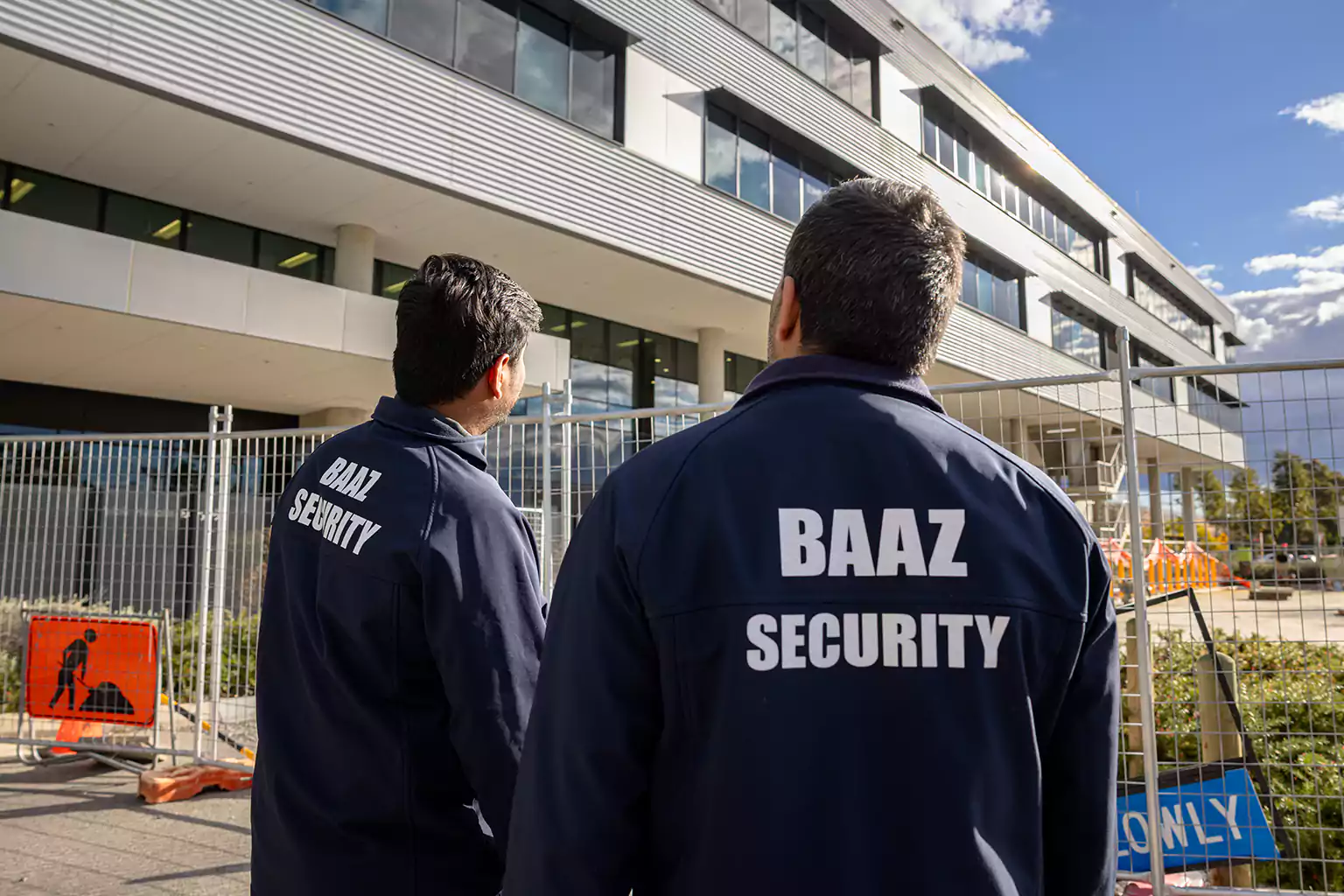
- Construction site security
- Commercial property security
- Event security
- Concierge-style security
- Security monitoring and incident response
The appropriate solution depends on factors such as the property’s size, operating hours, risk profile and security requirements.
Static Security Guards vs Mobile Security Patrols
The choice between static security guards and mobile patrols depends on the vulnerabilities identified during your security assessment.
Static Security Guards
Static security guards may be suitable when a business requires a continuous onsite presence, access control or customer-facing security.
They may be used for:
- Access control
- Gatehouse duties
- Site monitoring
- Retail security
- Commercial property security
- Construction site security
Mobile Security Patrols
Mobile patrols may be appropriate when a business requires regular property inspections, after-hours checks or security coverage across a larger area.
Some businesses may benefit from combining static guards and mobile patrols.
For example, a construction site could use onsite security during high-activity periods and mobile patrols overnight.
How Often Should a Business Conduct a Security Risk Assessment?
A security risk assessment should not necessarily be a one-time exercise.
Businesses should consider reviewing their security when:
- Moving to a new premises
- Expanding the property
- Changing operating hours
- Adding valuable equipment or stock
- Experiencing a security incident
- Introducing new access systems
- Changing staffing levels
- Opening new locations
- Identifying new security threats
Regular reviews can help ensure security measures continue to reflect changes in the business and its operating environment.
Common Business Security Weaknesses
Some vulnerabilities can appear repeatedly across different types of businesses.
Poor Access Control
Too many people may have unrestricted access to areas containing valuable assets or sensitive information.
Inadequate Lighting
Dark areas around a property can reduce visibility and create security vulnerabilities.
CCTV Blind Spots
Important areas may not be properly covered or monitored.
Unsecured Entry Points
Damaged locks, poorly secured gates or unsecured emergency exits can create vulnerabilities.
Lack of After-Hours Monitoring
A property may be left unattended for extended periods overnight.
Poor Incident Procedures
Employees may not know who to contact or what steps to take during a security incident.
No Regular Security Review
Security measures can become less effective as businesses, properties and operating procedures change.
Business Security Risk Assessment Checklist
Use this checklist as a starting point when reviewing your business security.
Physical Security
- Are all doors and windows secure?
- Are fences and gates in good condition?
- Are emergency exits controlled appropriately?
Access Control
- Do only authorised people have access?
- Are visitor procedures clearly defined?
- Are former employees’ access credentials removed?
CCTV
- Are important areas covered?
- Are there CCTV blind spots?
- Is footage usable during nighttime?
Lighting
- Are entrances and car parks adequately illuminated?
- Are perimeter areas visible?
After Hours Security
- Is the property regularly checked?
- Is there a response plan for alarms or suspicious activity?
People
- Do employees understand security procedures?
- Do staff know how to report incidents?
Emergency Response
- Is there a clear emergency plan?
- Are responsibilities clearly assigned?
If you identify several weaknesses, it may be time to review your overall security strategy.
Why Choose Professional Security Guard Services?
A professional security provider can help businesses move beyond basic security measures and develop a more structured approach to protecting people, property and assets.
Rather than relying solely on cameras, alarms or locks, trained security professionals can provide a physical presence, monitor activity, control access and respond to security concerns according to the agreed scope of service.
For businesses with higher security requirements, professional security guard services can form part of a layered security strategy.
Frequently Asked Questions About Business Security Risk Assessments
What is included in a business security risk assessment?
A business security risk assessment may review physical security, access control, CCTV, lighting, employee and visitor procedures, valuable assets, after-hours security and emergency response procedures.
Why is a security risk assessment important for a business?
A security risk assessment can help identify vulnerabilities before they contribute to theft, unauthorised access, vandalism or other security incidents. It can also help businesses determine which security measures may be appropriate for their circumstances.
When should a business conduct a security risk assessment?
Businesses should consider reviewing security when moving premises, expanding, changing operating hours, adding valuable assets, experiencing an incident, introducing new access systems or identifying new security concerns.
What is the difference between static security guards and mobile patrols?
Static security guards provide an onsite security presence, while mobile patrols involve scheduled or responsive visits to inspect and monitor a property. The appropriate option depends on the property’s requirements and identified vulnerabilities.
Can security guards help reduce business security risks?
Security guards can provide a physical security presence, monitor activity, control access and respond to security concerns within the agreed scope of service. Their role can complement other measures such as CCTV, lighting, alarms and access control.
Final Thoughts
Finding weaknesses in your business security starts with understanding where your property, people, assets and procedures may be vulnerable.
A thorough security risk assessment can reveal gaps in access control, CCTV coverage, lighting, physical protection, after-hours monitoring and emergency procedures.
Once vulnerabilities are identified, businesses can implement practical measures designed to reduce risk.
For some businesses, this may involve improving physical security. For others, mobile patrols or professional security guard services may provide additional protection suited to their requirements.
The key is to take a proactive approach to business security rather than waiting for an incident to reveal a weakness.
Need Professional Security Guard Services?
Baaz Security Service provides professional security solutions designed around the individual requirements of businesses and properties.
If you’re concerned about vulnerabilities at your workplace, commercial property, construction site or other premises, speak with Baaz Security Service about developing a security strategy suited to your needs